Calcio Storico 2026
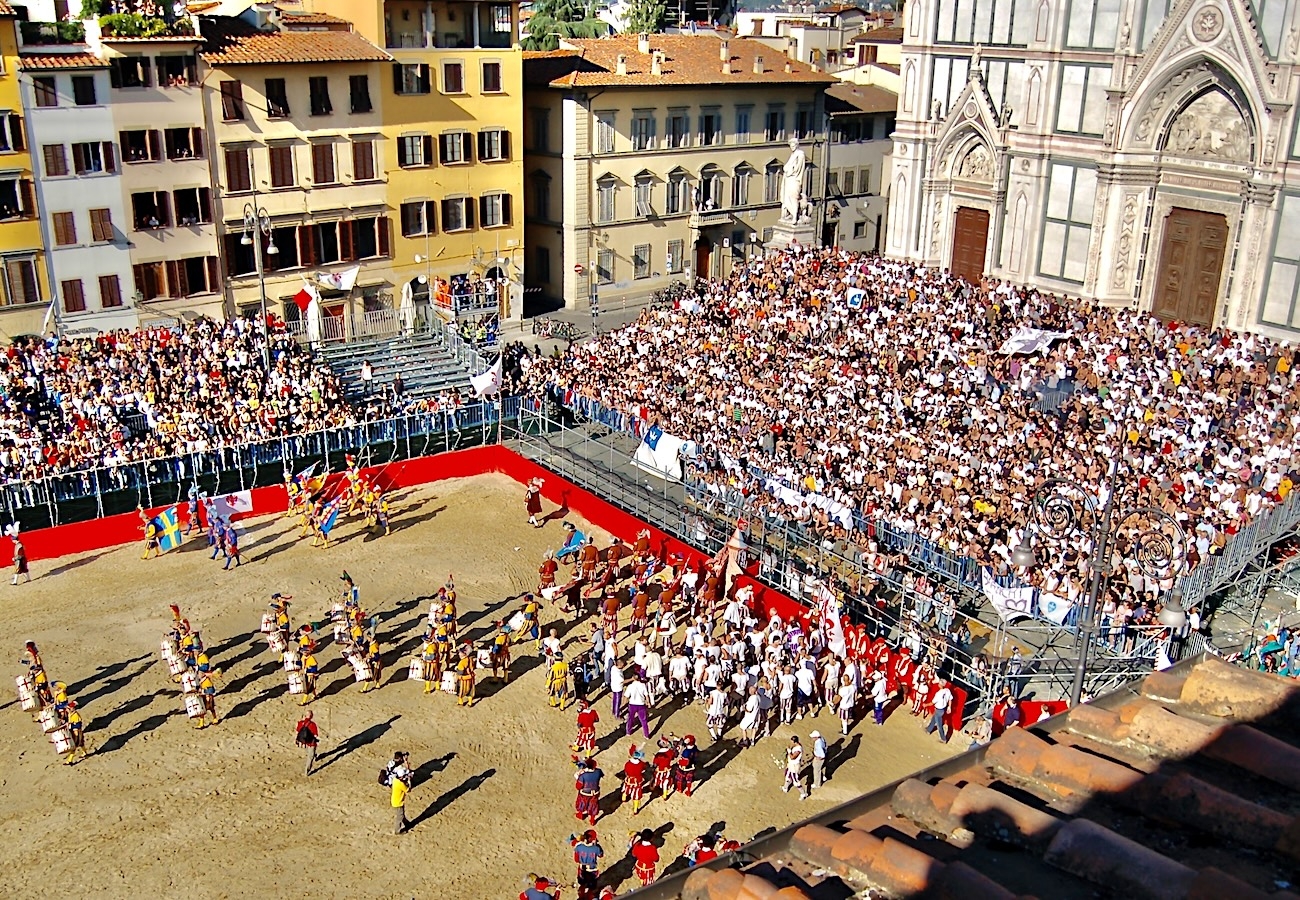
Calcio Fiorentino or Calcio in Costume - better known in Florence as Calcio Storico - is a traditional football game dating back to the 15th century. A violent mix of football, soccer, wrestling and perhaps boxing, the tournament is played in medieval costume every year from mid to late June.
The final match is usually held on June 24th (last year it was moved up a bit due to an election). The event takes place in Florence's Piazza Santa Croce, where the piazza is transformed into a playing field with a thick layer of sand under the players and bleacher-style stands for the spectators.
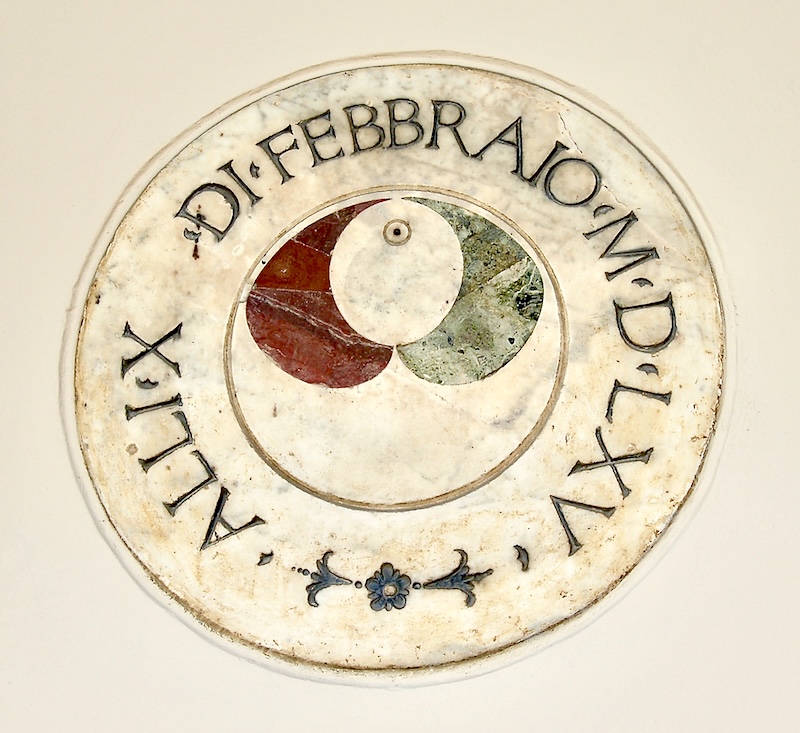
The exact origins of the game are unclear, but some believe it began as a way to keep military troops in shape while waiting to go to battle. Later, it became more of a competitive sport for young Florentine aristocrats. The first official rules for the Calcio Storico were written by Florentine Count Giovanni de'Bardi di Vernio in 1580. Each game of the Calcio Storico has 54 players divided into two teams of 27 which are lined up in three rows. After that, it seems there are no real guidelines - just the final objective of making a goal. The round ball is tossed around the field while the players do anything in their power to stop their opponents from scoring. Punching, tackling, kicking and clawing are all acceptable tactics to stop the opponent (we also saw biting and sand throwing one year!). A goal is made by throwing the ball over a 4 foot high wooden wall that runs the length of the field.
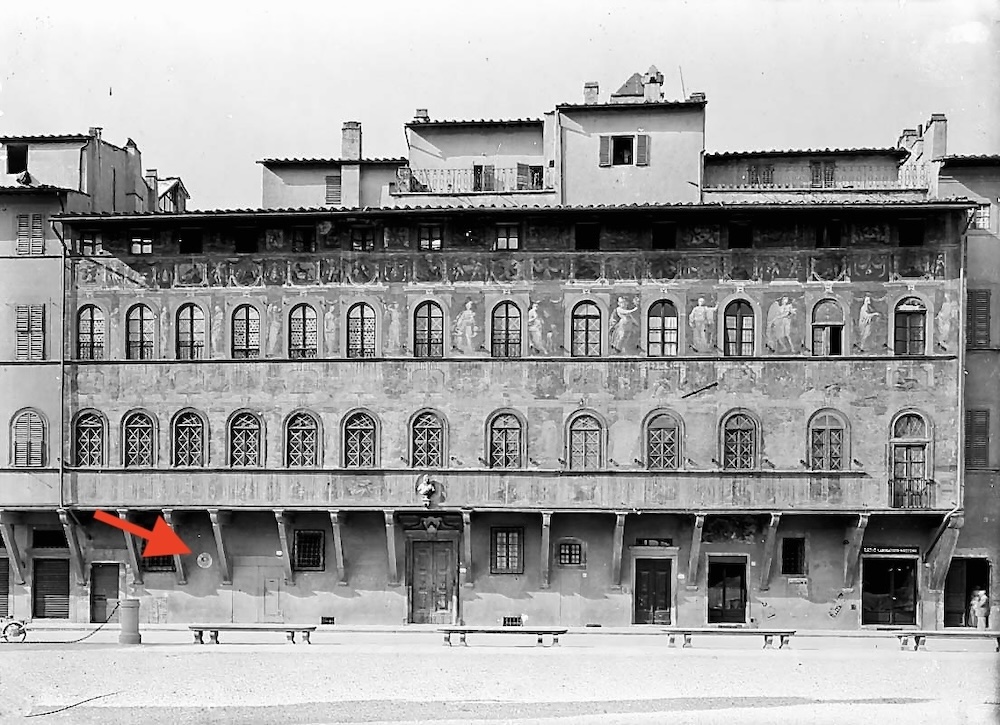
You can see the location of the above plaque on the wall of Palazzo Antellesi.
The four teams consist of players from four areas of the city: Santa Croce ("Azzurri" or Blues); Santa Maria Novella ("Rossi" or Reds); Santo Spirito ("Bianchi" or Whites); and San Giovanni ("Verdi" or Greens). Needless to say, passionate loyalties fuel the ruthlessness of the tournament.
Calendar of Matches
2026
- Semifinal: Rossi vs. Verdi vs, June 13
- Semifinal: Azzurri vs. Bianchi, June 14
- Final: TBD, June 24th
Before each game, a long procession of the players, flag throwers, drummers, and other Florentine citizens all dressed in historical costumes starts from Piazza Santa Maria Novella and slowly makes its way to Piazza della Signoria, down Via de'Neri, and then up Via dei Benci until it finally reaches Piazza Santa Croce. The comradery, pageantry, costumes and trumpets are quite impressive and worth watching even if you don't have the stomach (or tickets - which are usually very hard to come by) to watch the actual game.
An update on Calcio Storico tickets for 2026:
Ticket Sale MechanicsWhere: Exclusively online via TicketOne.it.
When: Sales launch precisely on June 11, 2026, at 12:00 PM (noon) local Italian time.
A Quick Reality Check on Buying
The warning from the SAI Programs guide is spot on. If you are trying to pull tickets for this, treating it like a high-stakes concert drop is your best bet:
Pre-register: Create and verify your TicketOne account before June 11. If you are logging in at 11:59 AM to set up an account, you will likely miss out.
Be fast: The final sells out almost instantly. Even the semifinals go incredibly quick because the local fan bases (the Calcianti and their neighborhoods) swamp the site.
Seating reality: Ticket prices generally range from around €29 (for the standing/uncovered curves) up to €80+ (for the covered grandstands/tribuna). Note that while tickets technically have seat numbers, once you are inside the arena in Piazza Santa Croce, local crowds tend to treat seating as "first-come, first-served" by neighborhood color, so plan to arrive early (around 3:30 PM is standard) to secure a good vantage point.
For a real sense of the atmosphere of the event, here is a well-done video of the Calcio Storico:
Frequently Asked Questions
What exactly is the Calcio Storico?
It's a medieval Florentine sport that predates both soccer and rugby by centuries - a brutal mix of football, wrestling, and bare-knuckle fighting played in full Renaissance costume. Each match lasts 50 minutes with no timeouts, no substitutions, and essentially no restrictions once the ball is in play. Punching, kicking, choking, and tackling are all legal. Biting and sand-throwing have been documented. The objective is simple: throw a round ball over a 4-foot wooden wall running the width of the field. Whoever scores the most goals wins.
When did it originate?
The exact origins are debated, but the game was likely played as early as the 15th century, possibly as a military fitness exercise for troops waiting to go into battle. It evolved into a competitive sport for Florentine aristocrats. The first formal rulebook was written in 1580 by Count Giovanni de'Bardi di Vernio.
Who plays, and what are the teams?
Each match fields 54 players - two teams of 27, lined up in three rows. The players represent four historic quarters of Florence:
- Santa Croce - the Azzurri (Blues)
- Santa Maria Novella - the Rossi (Reds)
- Santo Spirito - the Bianchi (Whites)
- San Giovanni - the Verdi (Greens)
Neighborhood loyalties run deep. The players are not professionals but they train seriously, and the rivalries are genuine.
Where does it take place?
Piazza Santa Croce. The square is covered with a thick layer of sand to create the playing field, and bleacher-style stands are erected around the perimeter for spectators. An ancient plaque on the wall of Palazzo Antellesi marks the exact center of the field - it's been there since the game was formalized in the 16th century.
When does it happen in 2026?
- Semifinal 1: Rossi vs. Verdi - June 13
- Semifinal 2: Azzurri vs. Bianchi - June 14
- Final: June 24 (feast day of San Giovanni Battista, Florence's patron saint)
The final is traditionally held on June 24th, though it has occasionally been moved slightly due to scheduling conflicts - last year being one example.
Is there a procession?
Yes, and it's worth watching even without tickets to the match. Before each game, a full historical procession departs from Piazza Santa Maria Novella - players, flag throwers, drummers, and costumed Florentines - and winds through the city via Piazza della Signoria, Via de'Neri, and Via dei Benci before arriving at Piazza Santa Croce. The pageantry is impressive.
How do I get tickets?
Tickets are sold exclusively online via TicketOne.it. For 2026, sales open on June 11 at 12:00 PM (noon) Italian time. The final sells out within minutes. The semifinals go fast too, driven by local fan bases.
Treat it like a high-demand concert drop: create and verify your TicketOne account well before June 11. Do not wait until launch day to register. Prices generally range from around €29 (standing/uncovered) to €80+ (covered grandstand). Seats are numbered on the ticket, but in practice the stands fill by neighborhood color - arrive around 3:30 PM to stake your spot.
Is it worth attending if I can't get tickets?
Genuinely, yes - for the procession alone. The route through the centro storico is publicly accessible and gives you the full costume, pageantry, and atmosphere without needing to sit inside the arena. If you're in Florence in mid-to-late June, the procession is a legitimate event on its own terms.
Is the violence real?
Yes. This is not theatrical combat. Players are hit hard, tackles are full-contact, and injuries occur every year. It was suspended for a period in the 2000s following particularly violent matches. The game operates with minimal refereeing intervention - the rulebook allows virtually everything except sucker-punching someone who is already fighting someone else. It's not a sport for squeamish spectators.
Comments:
By Anthony Finta, last updated:
What's New?

-

Palazzo Vecchio Museum: Hours, Tickets, What to See
Sep 29, 2026
-

Sillico and the Garfangana
Sep 28, 2026

-

Tuscan Horticultural Society
Sep 20, 2026

-

Badia Fiorentina
Aug 31, 2026
-

Festa della Rificolona
Aug 30, 2026
-

Vinny's Florence Food Walking Tour
Aug 27, 2026