Piazza Santa Trìnita
Piazza Santa Trìnita is named after the Church of Santa Trìnita on the northwest side of the somewhat triangular square. Once an isolated area outside the original Roman city walls, the piazza became integrated into Florence's urban fabric in 1175 following the founding of the Vallombrosian church and convent of Santa Trìnita. The Vallombrosian order, a reformed Benedictine congregation founded in the 11th century, established this important religious center that would give the square its name and spiritual anchor for centuries to come.
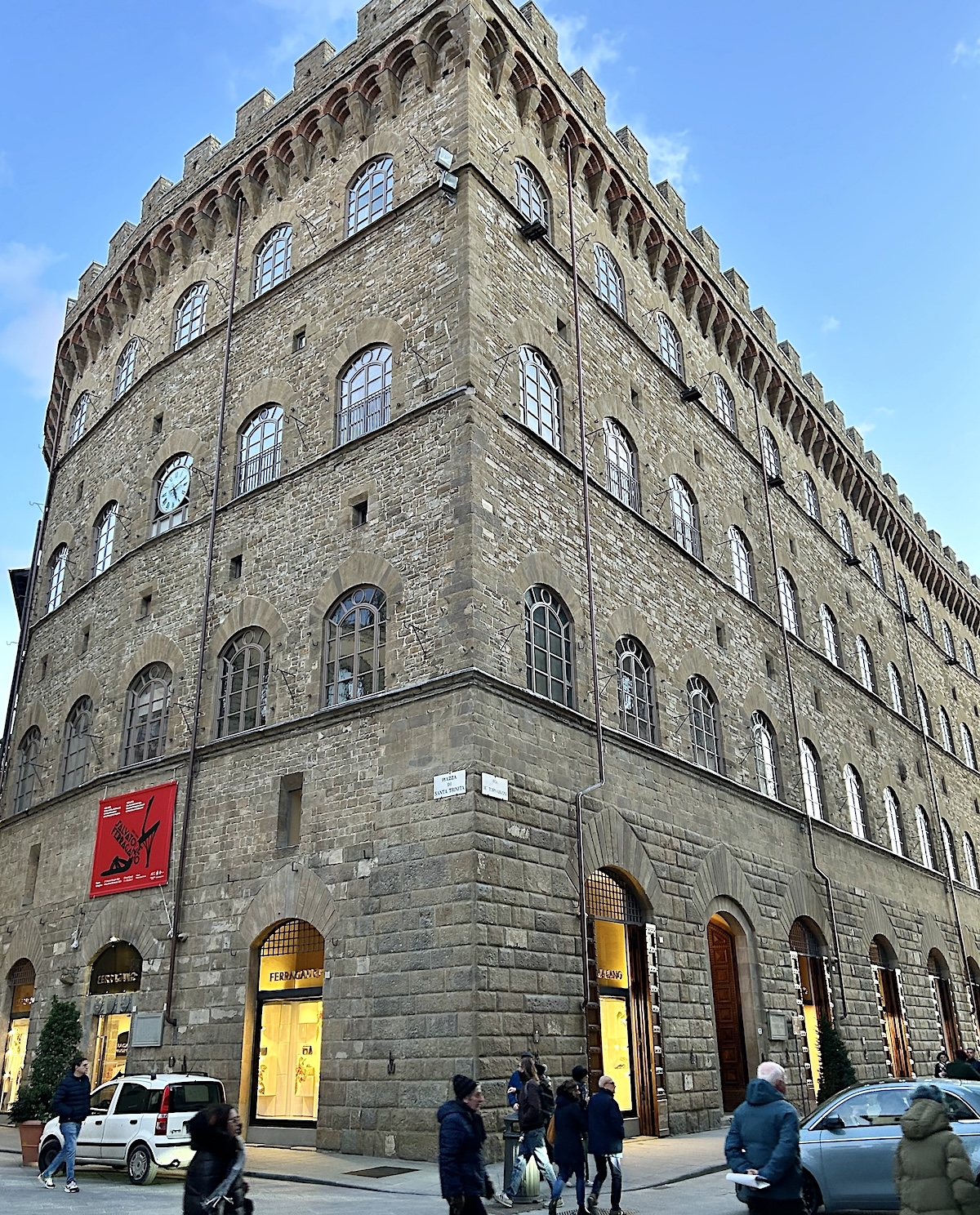
Three particularly famous palazzi exemplify the evolution of patrician architectural styles. The imposing Palazzo Spini Feroni (1289) anchors the south side of the square with its fortress-like medieval character - rusticated stone walls, crenellated roofline, and narrow defensive windows speak to an era when wealthy families built for protection as much as prestige. Though heavily restored in the 19th century, it remains one of Florence's best-preserved examples of 13th-century private architecture and has housed the Ferragamo fashion empire since 1938, with the Museo Salvatore Ferragamo occupying its upper floors and Ferragamo's retail shop on the street level.
The 15th-century Palazzo Buondelmonti represents the transitional moment between medieval fortress and Renaissance elegance. This late medieval/early Renaissance palazzo features the characteristic facade by Baccio d'Agnolo and a graceful loggia crowning its top floor - an architectural element that reflects the new confidence of the Quattrocento, when defensive concerns gave way to displays of refined taste and classical learning.
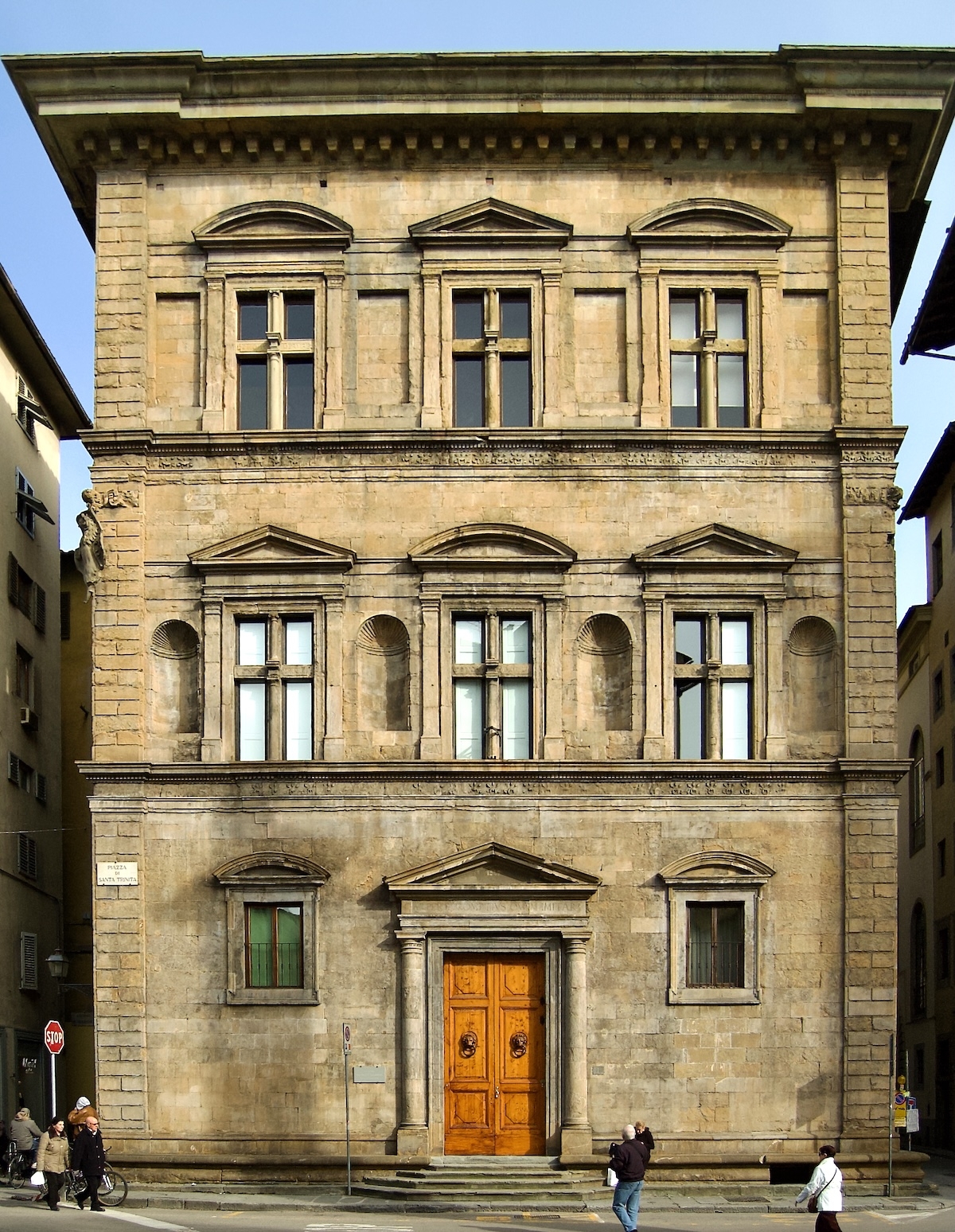
Palazzo Bartolini Salimbeni (1520-1523) stands as the square's most revolutionary statement - a pure High Renaissance masterpiece, also by Baccio d'Agnolo. Commissioned by the banker Giovanni Bartolini Salimbeni, its design broke dramatically with Florentine tradition: smooth stone ashlar replaced rustication, proportioned square windows (finestre inginocchiate, or "kneeling windows") replaced Gothic arches, and classical pilasters and pediments announced a new aesthetic allegiance to Rome rather than Florence's medieval past. Contemporary Florentines mockingly called it the "Roman" style and criticized its departure from local tradition. The windows were deemed so outrageous that a popular rhyme circulated: "Che belle finestre da inginocchiarsi" (What beautiful windows for kneeling). What was controversial in the 1520s is now recognized as one of Florence's most influential Renaissance palazzi, anticipating Baroque developments by nearly a century.
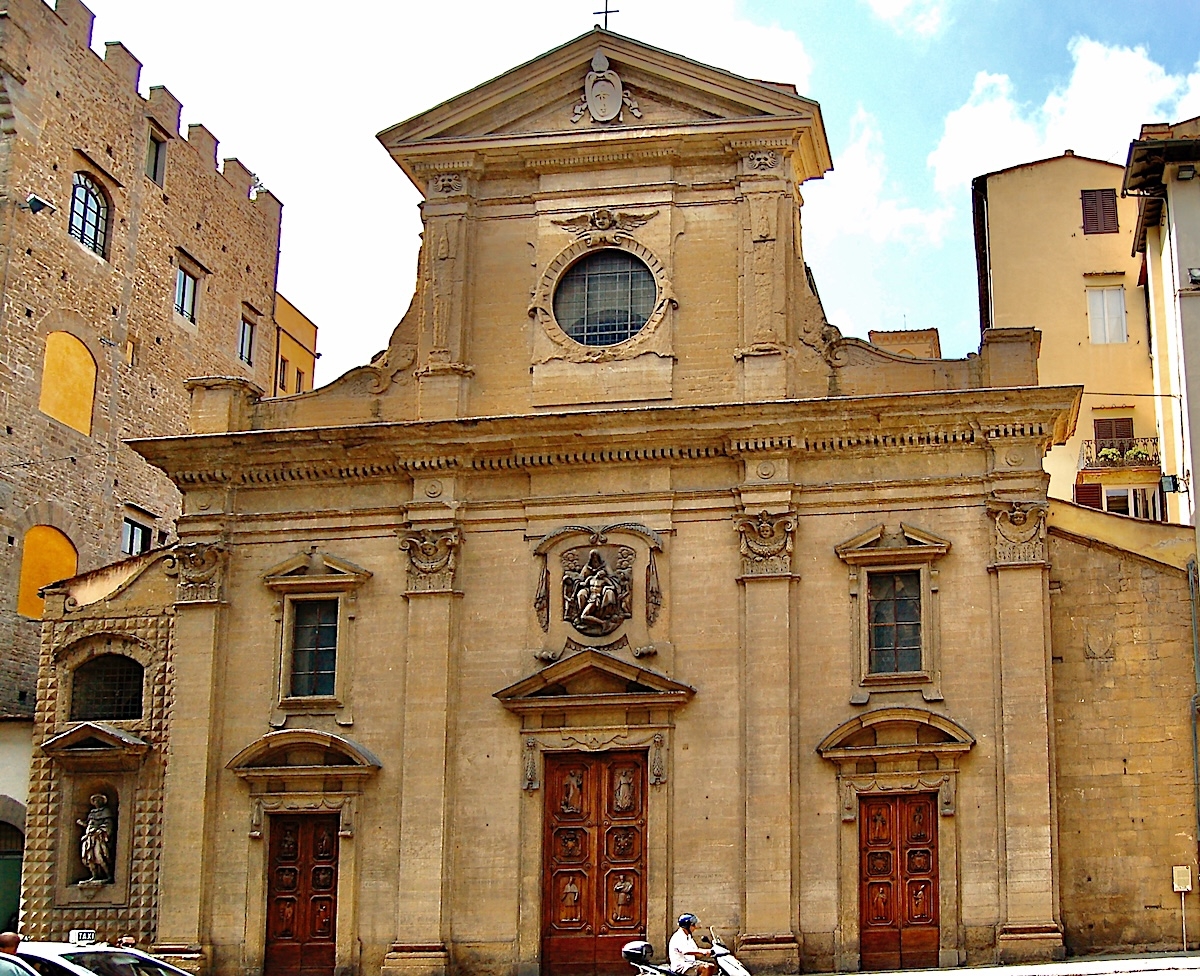
The church of Santa Trìnita, which gives the piazza its name, anchors the eastern side of the square with its understated elegance. Originally founded by the Vallombrosian order in the 11th century, the church underwent Gothic reconstruction in the 13th and 14th centuries. Its restrained Mannerist facade (1593-1594) by Bernardo Buontalenti stands in subtle contrast to the grand palazzi surrounding the piazza. Executed in pale pietra serena stone with classical pilasters and a curved pediment, it eschews the elaborate decoration typical of the period in favor of refined simplicity. The facade's quiet dignity provides a spiritual counterpoint to the square's secular architectural showpieces, reminding visitors that this was first and foremost a sacred precinct before it became one of Florence's most fashionable addresses.
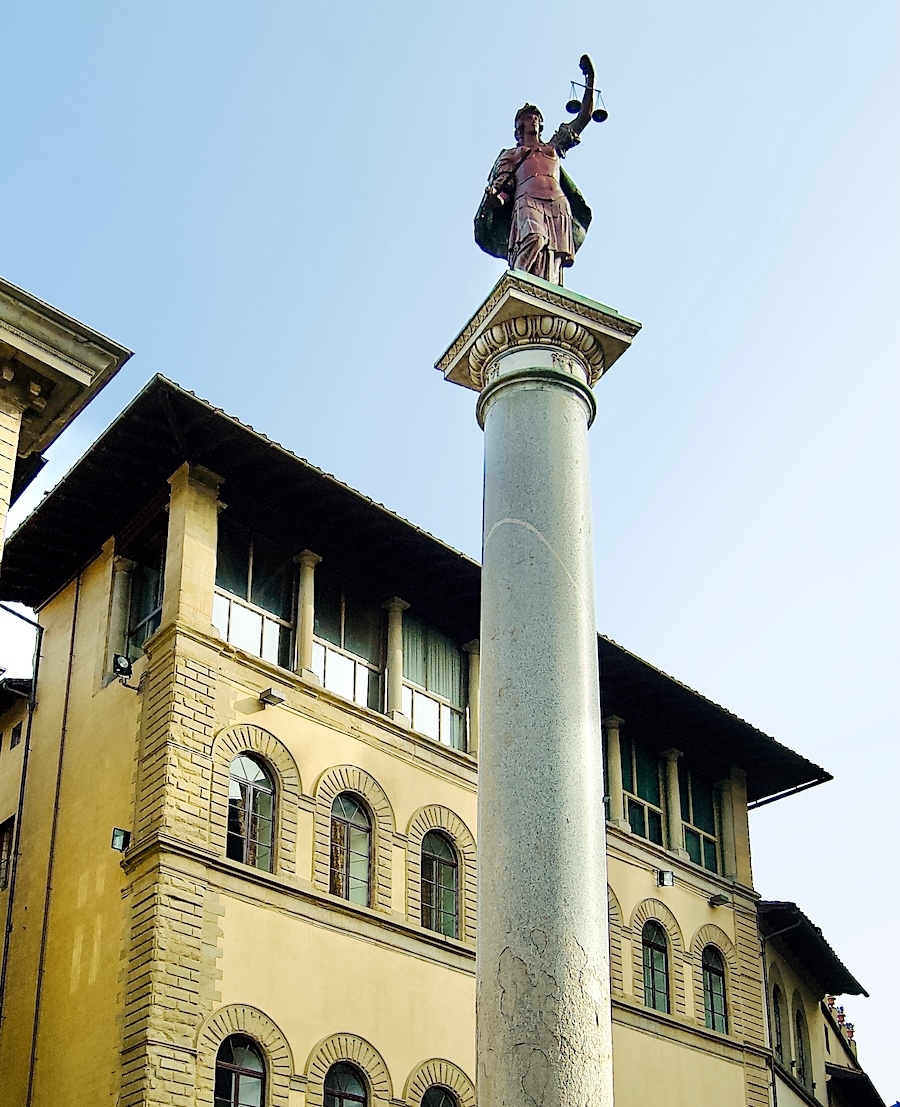
At the piazza's center stands the Column of Justice (Colonna della Giustizia), a Roman granite monolith topped by a porphyry figure of Justice, erected in 1565 to commemorate Cosimo I de' Medici's victory at the Battle of Montemurlo. The column was originally from the Baths of Caracalla in Rome, a gift from Pope Pius IV, and stands as a tangible link between Florence's Renaissance ambitions and imperial Rome.
The square today marks the beginning of Via de' Tornabuoni, Florence's most luxurious and fashionable shopping thoroughfare, lined with flagship stores of Gucci, Prada, Ferragamo, and other haute couture houses. The street was fully pedestrianized and beautifully repaved with new pietra serena stone and sidewalks in 2012-2013, enhancing its role as Florence's premier promenade for both shopping and architectural appreciation.
Here is a minute of video of the piazza:
Piazza Santa Trìnita on the map:
Comments:
By Anthony Finta, last updated:
What's New?
-

Palazzo Vecchio Museum: Hours, Tickets, What to See
Sep 29, 2026
-

Sillico and the Garfangana
Sep 28, 2026
-

Tuscan Horticultural Society
Sep 20, 2026

-

Badia Fiorentina
Aug 31, 2026
-

Festa della Rificolona
Aug 30, 2026
-

Vinny's Florence Food Walking Tour
Aug 27, 2026
-

Corri la Vita 2026
Aug 27, 2026