Where To See Renaissance Sculpture In Florence
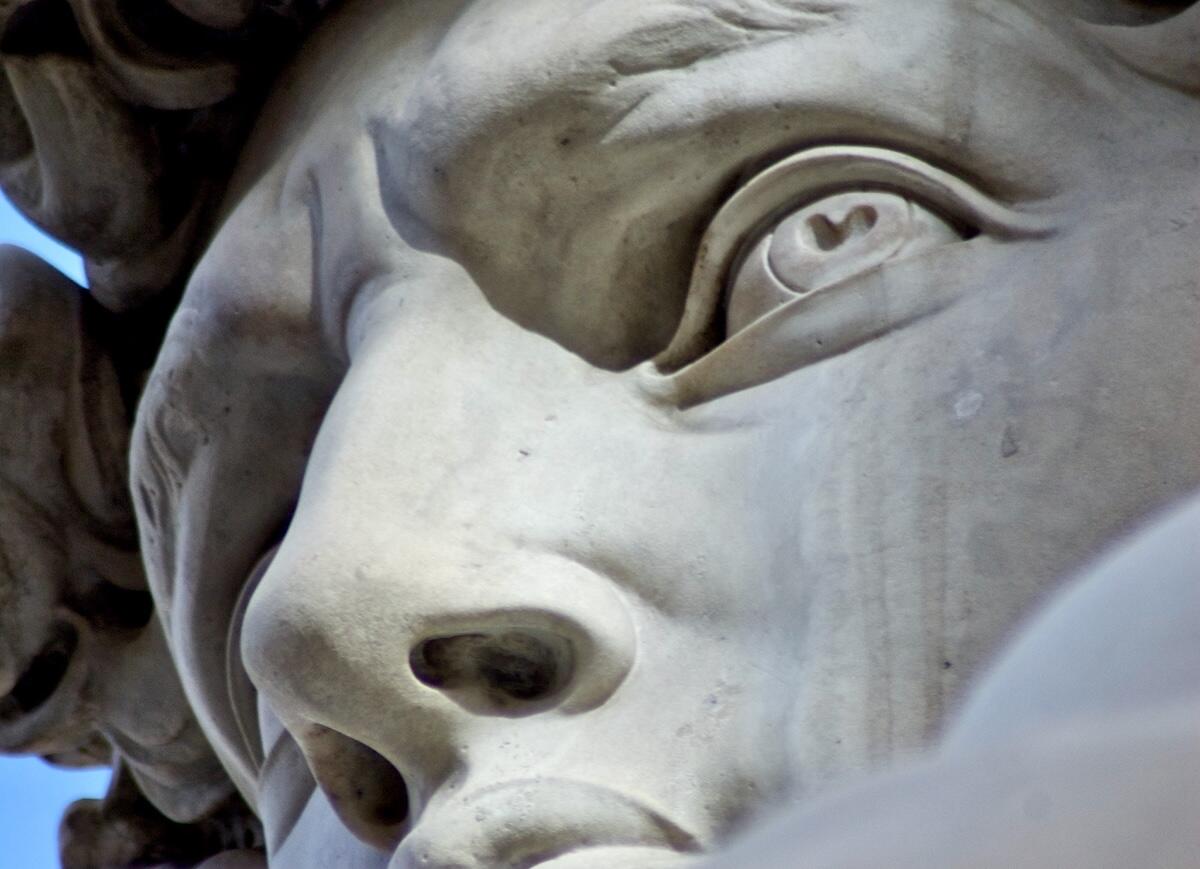
You probably know that Florence is the city in which the Renaissance was born. You may not be totally familiar with the concept that the style we call "Renaissance" first became apparent in sculpture, rather than in painting and architecture, which followed soon after.
Below we detail some of the museums, outdoor spaces, and individual sculptures that are not to be missed.
Renaissance Sculpture in Florence: A Visitor's Guide
Florence isn't just the birthplace of the Renaissance - it's where this transformative movement first emerged through sculpture, predating its influence on painting and architecture. While many visitors focus on Florence's stunning paintings and architecture, understanding the city's sculptural heritage provides deeper insight into how the Renaissance revolutionized artistic expression.
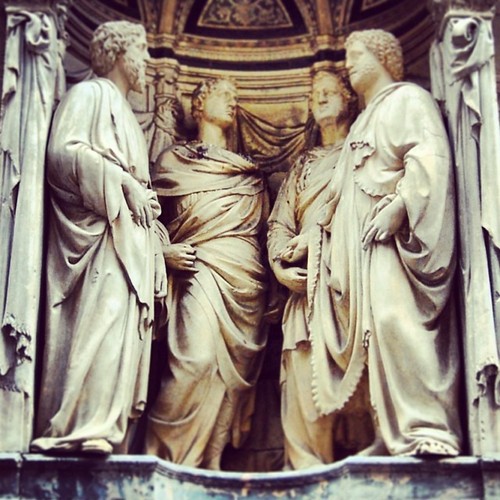
The Birth of Renaissance Sculpture at Orsanmichele
The Museum of Orsanmichele stands as a testament to Florence's unique blend of commerce, faith, and artistic innovation. This remarkable building, which began as the city's grain storage facility before being transformed into a church, houses some of the earliest examples of Renaissance sculpture. Each of Florence's powerful guilds was tasked with commissioning a sculpture for the building's exterior niches, leading to an unprecedented artistic competition that would help define Renaissance style.
The commissions set two young sculptors against each other in the early 1400s. Lorenzo Ghiberti had won the 1401 competition for the Baptistery doors and arrived with a reputation; Donatello, eight years his junior, arrived with a different idea of what a figure could do. Ghiberti's genius was pictorial - depth, atmosphere, the illusion of space in low relief - while Donatello's was anatomical and psychological, building figures that shift their weight, turn their heads and appear to be thinking. Set Ghiberti's St. John the Baptist beside Donatello's St. Mark and the divergence is immediate.
The statues in the exterior niches today are replicas, installed as the originals were brought indoors. Most of the originals are now displayed on the upper floors of the building, reached with a museum ticket, and those floors are worth the climb on their own for the vaulted grain-storage halls and the views out through the tracery windows. Two of the cycle's masterpieces are elsewhere: Donatello's marble St. George moved to the Bargello in 1891, and his gilded bronze St. Louis of Toulouse is in the museum at Santa Croce. The church and museum are open 8:30 a.m. to 6:30 p.m. and closed on Mondays.
The Revolutionary Spirit of Early Renaissance Sculpture
The Renaissance brought dramatic changes to sculptural style that would influence art for centuries to come. Where medieval sculpture often featured stiff, hieratic figures with standardized faces and formal poses, Renaissance sculptors sought to capture the reality of human form and expression. Donatello led this revolution by introducing naturalistic poses, particularly the contrapposto stance with weight resting on one leg and a shifted hip. His figures displayed individualized facial features that suggested inner life and psychological depth, moving decisively away from decorative, stylized representations toward a new humanism in art.
Major Collections and Their Significance
Museo dell'Opera del Duomo
The museum houses an extraordinary collection of sculptures originally created for the Cathedral complex. Here, visitors can trace the evolution from medieval to Renaissance style through works commissioned by the Operai, the Cathedral Works Committee. Among its treasures is Donatello's haunting wooden Mary Magdalene, a work that combines startling realism with profound spiritual intensity. The medieval reliefs from the Campanile provide fascinating context for understanding the artistic revolution that followed.
The Bargello National Museum
Housed in a former prison and police headquarters, the Bargello (tours, tickets) now stands as one of Italy's premier sculpture museums. The Donatello Room showcases the master's evolution from his early works to his mature style. Visitors can see Michelangelo's youthful Bacchus, where the artist's unprecedented understanding of anatomy and movement is already evident. Verrocchio's David demonstrates how the next generation built upon Donatello's innovations while developing their own distinctive approaches.
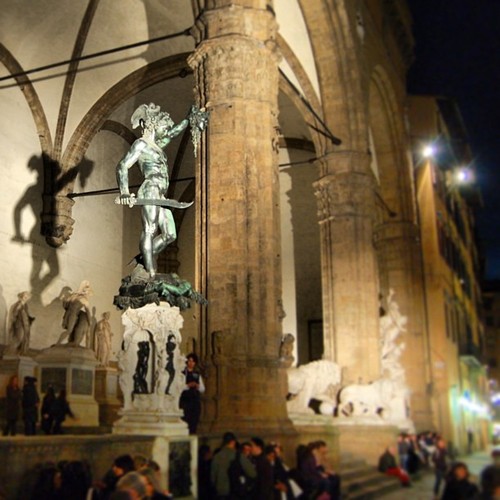
Piazza della Signoria and Loggia dei Lanzi
This remarkable outdoor sculpture gallery has been the heart of Florentine civic life for centuries. The Loggia dei Lanzi offers a unique opportunity to see monumental sculpture in its intended outdoor setting, mixing Roman antiquities with Renaissance masterpieces. Cellini's bronze Perseus (still the original) stands as perhaps the most dramatic example of Mannerist sculpture, while the various replicas throughout the piazza help visitors understand how these works would have appeared to Renaissance Florentines.
The Triumph of David
No discussion of Florentine sculpture would be complete without mentioning Michelangelo's David, now housed in the Accademia Gallery (tickets, tours). Moved from its original location in Piazza della Signoria in 1873, this colossal marble masterpiece represents the culmination of Renaissance sculptural innovation. The statue combines unprecedented technical skill with profound symbolic meaning, embodying both civic pride and artistic achievement.
The Uffizi Gallery
Most of the sculpture in the Uffizi is ancient - Roman marbles collected by the Medici line the long corridors. The major Renaissance exception stands at the head of the third corridor: Baccio Bandinelli's Laocoön (1520-25), a marble replica of the Hellenistic group unearthed in Rome in 1506. The ancient original was missing several arms, and Bandinelli completed them as he believed they should be. It is a direct record of how Florentine sculptors of the early 1500s measured themselves against antiquity - and most visitors walk straight past it.
A Legacy in Stone and Bronze
Florence's sculptural heritage demonstrates how Renaissance artists revolutionized the representation of the human form and set the stage for centuries of artistic development. When visiting these sites, take time to notice how different artists approached similar subjects, how materials were chosen for specific effects, and how sculptural style evolved over the course of the 15th and 16th centuries. Early morning visits (or very late afternoon) often provide the best opportunity for quiet contemplation of these masterpieces that changed the course of art history.
Remember that while many of the outdoor sculptures are replicas, this practice of preservation ensures that future generations can continue to appreciate these revolutionary works in their original locations, while the authentic pieces remain protected in museum settings.
Renaissance Sculpture In Florence FAQ:
Where can you see Renaissance sculpture in Florence?
Six places hold most of it. The Bargello has the deepest collection of Renaissance sculpture in Italy, the Museo dell'Opera del Duomo holds the originals made for the cathedral, Baptistery and campanile, and the Accademia has Michelangelo's David and the unfinished Prisoners. Orsanmichele preserves the guild statues carved for its exterior niches, the Medici Chapels contain Michelangelo's New Sacristy, and Piazza della Signoria with the Loggia dei Lanzi is an open-air gallery that costs nothing and never closes. Santa Croce, Santo Spirito, Santa Maria Novella and San Lorenzo hold major works in the settings they were made for, and the Boboli Gardens is the one park with Renaissance sculpture in quantity.
Which Florence museum has the best Renaissance sculpture collection?
The Bargello. It holds Donatello's marble David, his bronze David and his St. George, Verrocchio's David, Michelangelo's Bacchus, Pitti Tondo and Brutus, the two competition panels Ghiberti and Brunelleschi submitted in 1401 for the Baptistery doors, and a room of Luca della Robbia glazed terracottas. The museum is open 8:15 a.m. to 6:50 p.m. and closed on Mondays.
Which churches in Florence have Renaissance sculpture?
Santa Croce has Donatello's gilded Cavalcanti Annunciation and his wooden Crucifix in the Bardi Chapel, Bernardo Rossellino's tomb of Leonardo Bruni, Desiderio da Settignano's tomb of Carlo Marsuppini, and Luca della Robbia roundels in Brunelleschi's Pazzi Chapel. Santo Spirito has Michelangelo's wooden Crucifix, carved at about eighteen, displayed in the sacristy. Santa Maria Novella has Brunelleschi's wooden Crucifix in the Gondi Chapel. San Lorenzo has Donatello's decoration of the Old Sacristy and the two bronze pulpits he left unfinished at his death. Orsanmichele is both a working church and a sculpture museum.
Where can you see Renaissance sculpture in Florence for free?
Piazza della Signoria and the Loggia dei Lanzi are open at all hours with no ticket, and what stands there includes originals by Cellini, Giambologna, Bandinelli and Ammannati. The fourteen exterior niches at Orsanmichele can be studied from the street, though the figures in them are replicas. The courtyard of Palazzo Vecchio is free to enter. Piazzale Michelangelo has bronze copies of David and of the four allegories from Michelangelo's New Sacristy. State museums, including the Bargello, the Accademia, the Medici Chapels and Orsanmichele, admit everyone free on the first Sunday of each month.
Which parks and gardens in Florence have Renaissance sculpture?
The Boboli Gardens, behind Palazzo Pitti. The Buontalenti Grotto has copies of Michelangelo's four Prisoners wedged into the corners of its first chamber, where the originals stood from 1585 until 1908, and Giambologna's bathing Venus in the third chamber. Giambologna's Oceanus fountain stands at the center of the Isolotto, though that figure is a copy and the original is in the Bargello. The garden also displays the Roman antiquities that Renaissance Florence collected and arranged as sculpture in its own right. Boboli requires a ticket; the Bardini Garden next door is largely later work.
Is Michelangelo's David in Piazza della Signoria the original?
No. The original stood outside Palazzo Vecchio from 1504 until 1873, when it was moved indoors to the Accademia Gallery to protect it from the weather. The marble copy now in the piazza was installed in 1910. The bronze David at Piazzale Michelangelo is also a copy. There is one original and it is in the Accademia, which is closed on Mondays and sells out well ahead in high season.
Which sculptures in Piazza della Signoria are originals?
Cellini's bronze Perseus and Giambologna's Rape of the Sabine Women in the Loggia dei Lanzi are originals, as are Bandinelli's Hercules and Cacus and Ammannati's Neptune fountain. The David is a copy. Donatello's Marzocco lion is a copy, with the original in the Bargello. Donatello's Judith and Holofernes is a copy, with the original inside Palazzo Vecchio.
Which Florence museums are closed on Monday?
The Accademia, the Bargello, the Medici Chapels and Orsanmichele all close on Mondays, so a sculpture itinerary built around a Monday collapses. The Museo dell'Opera del Duomo opens daily but closes the first Tuesday of each month. The museum route at Santo Spirito, which includes the sacristy with Michelangelo's Crucifix, closes on Wednesdays. Tuesday through Sunday is the safe window.
Comments:
By Anthony Finta, last updated:
What's New?

-

Tuscan Horticulture Society
Sep 20, 2026

-

Badia Fiorentina
Aug 31, 2026
-

Festa della Rificolona
Aug 30, 2026
-

Vinny's Florence Food Walking Tour
Aug 27, 2026
-

Corri la Vita 2026
Aug 27, 2026
-

Mostra Mercato Internazionale dell'Antiquariato
Aug 26, 2026
-
San Lorenzo
Aug 24, 2026